Fishin Frenzy Demo — Where the Free Version Stops and Real Risk Starts
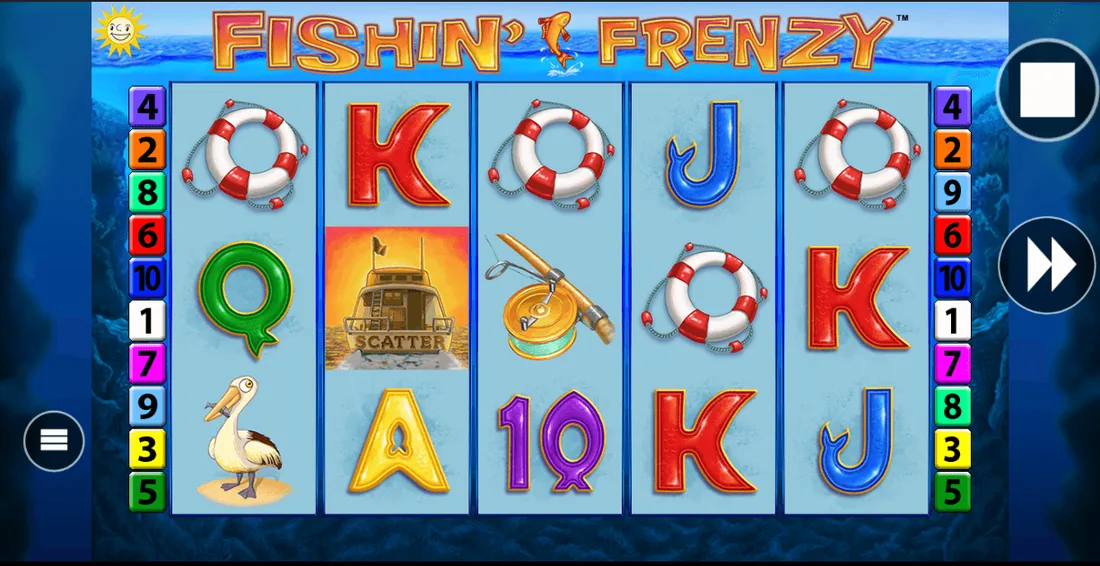
Two ways to meet Fishin Frenzy: a demo that costs nothing but hides the withdrawal process, or a real-money account where every spin risks cash you've deposited. The demo runs on the same mathematics — 96.12% return to player, the same scatter frequency, the same free-spins round — but it skips the parts that expose you to loss: affordability checks at £150 a month, document requests before your first payout, and the reality that most sessions end below the starting balance.
This page maps what the free version shows, what it conceals, and how to move to real stakes without stumbling into the expensive mistakes that cost new players hundreds in the first fortnight. Every number comes from UKGC-licensed operators serving British players, where the regulator's stake caps and self-exclusion rules shape how the game behaves under real conditions.
Where the Demo Runs and Whether You Need an Account
Fishin Frenzy demo sits on UKGC-licensed casino sites, accessible after you log in and verify your age. Some operators show the demo button on the game page without forcing registration, but the majority require a confirmed account — email, date of birth, postcode — before the reels load. This is a licensing requirement: the UK Gambling Commission mandates age verification before any gambling content appears, even if no money changes hands.
Once you're in, the demo uses a fictional balance — often £100.00 or £1,000.00 — that resets when it runs dry. You set the stake between £0.10 and £5.00, matching the real-money range for players over 25. The £2.00 cap for 18–24-year-olds applies only to cash play; the demo lets anyone choose the full range because it enforces no actual loss.
- Desktop browser: the game opens in a modal or new tab, identical to the real version except for the balance label.
- Mobile browser: same behaviour; the demo scales to portrait orientation and touch controls replace mouse clicks.
- App: UKGC sites rarely bundle slots into standalone apps. Fishin Frenzy runs in Safari or Chrome, wrapped as a web app if you add the site to your home screen.
What a Typical Demo Session Looks Like — Speed, Triggers, Balance Swings
Set the stake to £1.00 and tap auto-spin. The reels cycle every two seconds, so you burn through 30 spins — £30.00 of fictional stake — in a minute. Base-game wins land sporadically: a three-of-a-kind fish pays £2.00 to £5.00, recouping a few spins but rarely enough to climb above the starting balance. The volatility is medium-high, which means long stretches where nothing significant hits.
The free-spins round triggers when three or more scatter symbols (the fisherman) land anywhere on the reels. Frequency averages one trigger per 150 spins in the full RTP version, so at £1.00 stakes that's £150.00 of demo balance spent before you see the bonus. Inside the round, you spin ten times with all fish symbols revealing cash prizes if the fisherman appears. A middling bonus pays £20.00–£50.00; a strong one with multiple fishermen can exceed £200.00.
The demo balance climbs and crashes exactly as real money would — because the random-number generator and payout logic are identical — but you never face the consequence of a losing streak. When the balance drops to zero, you refresh the page and start again with the full fictional amount.
Which Numbers Transfer to Real Money and Which Don't
The mathematics carry over exactly: 96.12% RTP, the same symbol weightings, the same free-spins trigger rate, the same maximum win potential. A £1.00 spin in the demo produces the same distribution of outcomes as a £1.00 spin with real cash. The volatility — those dead runs of 50 spins with nothing over £5.00 — replicates the real experience, which is why the demo is useful for gauging how fast your balance erodes.
What the demo hides: the friction of deposit limits, the 24–48-hour document check before your first withdrawal, and the psychological weight of watching real money vanish. A demo losing streak costs nothing; a real one at £2.00 spins drains £100.00 in under an hour if the bonus round doesn't land. The emotional response to that loss — the urge to chase it with a bigger deposit — never surfaces in free play.
- RTP and volatility: identical in demo and real modes.
- Stake range: the demo allows £0.10–£5.00 regardless of your age; real money enforces the £2.00 cap for 18–24-year-olds.
- Withdrawal process: absent in demo. Real withdrawals require KYC documents and take one to three working days via Faster Payments.
- Bonus wagering: not modelled. A £10.00 no-deposit bonus might need £350.00 staked (35× wagering) before you can withdraw; the demo never mentions this.
The Parts the Demo Never Shows — Withdrawal, Documents, Bonus Conditions
You win £200.00 in the demo and the balance updates instantly. In real play, that £200.00 sits in your account until you request a withdrawal, at which point the operator asks for proof of identity and address if you haven't submitted them already. The UKGC requires this before the first payout: a photo driving licence or passport, and a recent utility bill or bank statement. Processing takes 24 to 48 hours, sometimes longer if the documents need resubmission.
Affordability checks start when your net deposits — total paid in minus total withdrawn — reach £150.00 in a month. The operator pulls data from credit-reference agencies at the first stage, soft checks that don't affect your credit score. If the deposits climb higher, you may be asked to provide payslips or bank statements. This never appears in demo play, but it's the reason some players find their accounts restricted after a week of real-money sessions.
Bonus offers — £10.00 no deposit, or a 100% match on your first £50.00 — come with wagering requirements, typically 35× to 50× the bonus amount. A £10.00 bonus needs £350.00 to £500.00 staked before you can withdraw any winnings derived from it. The demo shows none of this, so new players often accept a bonus without reading the terms and then discover they can't cash out until they've met the rollover.
Demo on a Phone — What Works and What Breaks
Fishin Frenzy scales to mobile browsers without friction. Open the demo link in Safari or Chrome, log in if required, and the reels resize to fit portrait orientation. Touch replaces click: tap the spin button, swipe to adjust the stake, pinch to zoom the paytable. Auto-spin and turbo mode both function, and the free-spins round plays identically to the desktop version.
Connection drops are the main failure point. If your mobile data cuts out mid-spin, the game pauses and reconnects when the signal returns, resuming from the last completed spin. This is the same behaviour as real money, where a lost connection doesn't void your stake — the spin completes on the server and the result waits for you to log back in.
- Portrait mode: the reels stack vertically, controls move to the bottom edge.
- Landscape mode: closer to the desktop layout, with the paytable and settings accessible from side menus.
- Data usage: a 30-minute demo session at standard quality uses roughly 15–20 MB. Turbo mode increases this slightly due to the faster animation refresh.
There's no standalone Fishin Frenzy app for UKGC sites. The game runs in the browser, which is how most UK-licensed operators deliver slots. You can add the site to your home screen as a web app shortcut, but it still opens in Safari or Chrome rather than a native container.
The Lowest-Risk Path from Demo to Real Stakes
Start with the demo at the stake you'd actually use — if you plan to bet £0.50 per spin with real money, set the demo to £0.50 and run 200 spins. Track how often the balance dips below the starting point and how many spins pass before the free-spins round. This gives you a realistic picture of how long £50.00 lasts at that stake, which is more useful than testing £5.00 spins you'd never afford in a real session.
When you switch to real money, deposit the smallest amount the site allows — often £10.00 — and set a session limit in the account settings. UKGC operators must offer deposit limits by day, week, or month; configure a £50.00 weekly cap before you play the first spin. This prevents the common mistake of chasing losses with a second deposit inside the same hour.
- Register on a UKGC-licensed site — check the footer for the licence number and verify it in the regulator's public register.
- Complete age and identity verification before depositing. Upload the documents early; waiting until you want to withdraw adds 24–48 hours to the payout.
- Deposit £10.00 via debit card or PayPal. Avoid bonuses on the first deposit unless you've read the wagering terms in full.
- Set a weekly deposit limit of £50.00 and a session time limit — 30 minutes is enough to see the game's volatility without losing focus.
- Start at £0.10 or £0.20 stakes. The demo allows £5.00, but real money at that level burns through £150.00 in half an hour if the bonus round doesn't hit.
How Stake Caps and Affordability Checks Change the Real Experience
The demo lets you choose any stake up to £5.00, but real play enforces the UKGC's age-based caps: £2.00 per spin if you're 18 to 24, £5.00 if you're 25 or older. The operator's system reads your date of birth from the verification documents and applies the limit automatically. You can't override it, and attempting to bet more than your age group allows triggers an error message.
Affordability checks start when your net deposits reach £150.00 in a calendar month. The operator pulls soft data from credit-reference agencies — your address history, whether you're on the electoral roll, any county court judgments — to assess whether the deposits match your likely income. If the data raises concerns, you'll be asked to upload payslips or bank statements. If you don't provide them, the account is restricted: no new deposits, no play, but withdrawals remain available.
This is invisible in demo mode, but it's the reason many new players hit a wall after their first week. They deposit £50.00 on Monday, another £50.00 on Wednesday, £75.00 on Friday — £175.00 in five days — and on Saturday the account flags for affordability. The operator asks for evidence of income, and the player discovers they can't deposit again until they've submitted three months of payslips.
| Age Group | Stake Cap per Spin | Affordability Check Threshold |
|---|---|---|
| 18–24 | £2.00 | £150.00 net deposits per month |
| 25+ | £5.00 | £150.00 net deposits per month |
Why the Demo Balance Resets and Real Losses Don't
Run the demo balance to zero and refresh the page: you're back to £100.00 or £1,000.00, ready to spin again. This is the single biggest difference between demo and real play. In a real session, when the balance hits zero, the money is gone. You can deposit more — assuming you haven't hit your weekly limit or triggered an affordability check — but the £50.00 or £100.00 you just lost won't reappear.
The demo's unlimited resets conceal the psychological cost of a losing streak. Lose £100.00 in demo spins and you feel nothing; lose £100.00 in real money and the urge to chase it — deposit another £50.00, raise the stake to £2.00, skip dinner to keep playing — becomes overwhelming. The mathematics are identical, but the emotional response isn't.
This is why the demo is useful for learning the game's rhythm — how often the bonus lands, how fast the balance swings, how long £50.00 lasts at £0.50 spins — but useless for preparing you for the feeling of real loss. If you've never gambled with your own money, the demo won't inoculate you against the impulse to chase. The only defence is a deposit limit you set before the first spin, low enough that losing it doesn't disrupt your rent or bills.
- Demo resets: instant, unlimited, no consequence.
- Real deposits: limited by the caps you configure, and by UKGC affordability thresholds.
- Withdrawals: first payout takes 24–48 hours for KYC checks, then one to three working days via Faster Payments.
- Tax: your winnings are tax-free. The operator pays 40% Remote Gaming Duty to HMRC, raised from 21% in April of this year.
FAQ
Can I play Fishin Frenzy demo without registering on a UK site?
Most UKGC-licensed operators require a verified account — email, date of birth, postcode — before showing the demo, because the regulator mandates age checks before any gambling content appears. A few sites display the demo button without forcing registration, but you still can't switch to real money until you've completed full KYC. If a site offers unlimited demo access with no age gate, check the footer for a UKGC licence number and verify it in the public register; unlicensed operators have no legal standing in the UK.
Does the demo show the same RTP and volatility as real-money Fishin Frenzy?
Yes. The demo runs on identical mathematics: 96.12% return to player, the same symbol weightings, the same free-spins trigger frequency. A £1.00 spin in demo produces the same distribution of outcomes as a £1.00 spin with real cash. What the demo hides is the friction of withdrawal — KYC document checks, one to three working days for Faster Payments — and the psychological weight of losing real money, which drives the urge to chase losses with a bigger deposit.
What's the lowest-risk way to move from demo to real stakes on a UKGC site?
Deposit £10.00, set a £50.00 weekly limit in the account settings before your first spin, and start at £0.10 or £0.20 stakes. Upload your ID and proof of address early so the KYC check doesn't delay your first withdrawal. Avoid bonuses unless you've read the wagering terms — a £10.00 no-deposit offer typically requires £350.00 to £500.00 staked before you can cash out. If you're 18 to 24, the stake cap is £2.00 per spin; if you're 25 or older, it's £5.00. Affordability checks start at £150.00 net deposits per month, so keep deposits below that threshold until you've confirmed your income with the operator.